

As summer begins to make way for autumn here in Norfolk, there are lots of things to look forward to: changing colours, cooler walks and cosy evenings at home.
There is, however, one small downside for those of us who share our homes with four-legged family members.
Muddy paws season is coming.
Living with pets inevitably means a certain amount of fur, muddy footprints, water bowls, beds, crates and other paraphernalia. But when you're designing a new kitchen, utility or boot room, there is an opportunity to think about these things before the furniture is made – and create a home that works beautifully for its human and animal inhabitants alike.
Here are seven of our favourite pet-friendly design ideas.
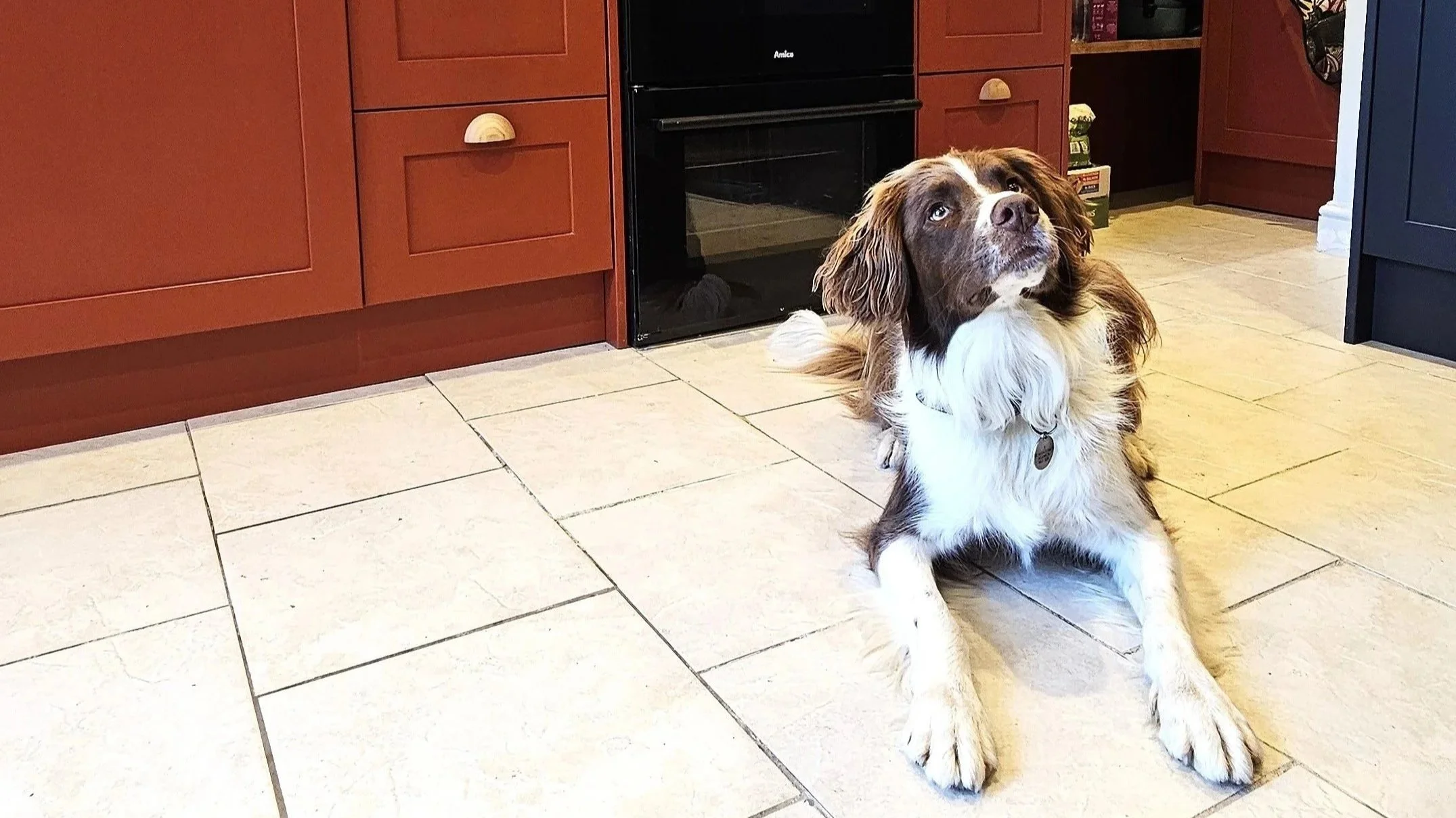
1. Give muddy paws their own dog shower
If autumn and winter walks regularly end with a muddy dog standing at the back door, a dedicated dog shower can be an incredibly useful addition to a utility or boot room.
We've recently discovered ceramic dog showers available in several different sizes, which can be incorporated into the design of a room rather than looking like a purely practical afterthought. https://incredibledogshower.co.uk/
They're particularly well suited to utility rooms, boot rooms and what we affectionately call “bootility rooms” – spaces designed to deal with everything that comes into the house from outdoors.
A dedicated washing area means muddy paws can be dealt with before they make it any further into the house, while towels, leads and other walking essentials can all have their own storage nearby.
2. Create an outdoor dog washing point
If you're undertaking a larger renovation, you can go one step further and deal with the mud before your dog even crosses the threshold.
We've now had two clients incorporate an outdoor shower or washing point for their dogs, with both hot and cold water available. One of these formed part of our pet-friendly coastal renovation at The Den in Eccles-on-Sea.
It's a relatively simple idea, but an extremely practical one if you have a dog that enjoys muddy walks, the beach or the North Norfolk countryside.
Planning it as part of a renovation means the plumbing can be considered at the right stage, rather than trying to find a solution afterwards.
And on particularly muddy days, being able to rinse paws – or the entire dog – outside before coming indoors can be rather appealing.
3. Borrow a kitchen idea for your pet's water station
Pot fillers are traditionally installed above hobs, allowing large pans to be filled without carrying them across the kitchen.
But why should humans have all the clever plumbing?
Installing a small pot filler or suitable tap directly above your pet's water bowl creates a designated water station and makes topping up fresh water incredibly easy.
It also gives something that can otherwise feel slightly incidental – a bowl sitting on the floor in whichever corner it fits – an intentional place within the design.
A small niche or dedicated section of cabinetry can turn the everyday water bowl into part of the room rather than something that was added afterwards.
4. Build dog beds and crates into the furniture
Some dogs love their crates. For them, they aren't simply somewhere they're put when necessary – they're a familiar, comfortable space where they can settle and relax.
Unfortunately, a large freestanding wire crate isn't always the easiest thing to incorporate into a carefully designed interior.
Bespoke furniture gives us the opportunity to design around the dog as well as the humans.
We've previously been asked to create dedicated spaces within cabinetry for dog beds, from simple open sleeping nooks to enclosed areas that can be secured when required. A suitable door or grille can be incorporated into the furniture itself, creating the function of a crate without having to find somewhere to put a separate one.
Most importantly, these spaces can be made to suit the individual dog. After all, good bespoke design should respond to how a household actually lives – and that includes its pets.
5. Hide the litter tray
Cat owners will know that litter trays fall firmly into the category of necessary but not necessarily beautiful.
One clever solution we've seen is to incorporate the litter tray into cabinetry, with a discreet opening allowing the cat to come and go while keeping the tray itself hidden from view.
A properly considered compartment can give the litter tray a permanent home rather than sacrificing a corner of a utility room or bathroom to it.
It's also another good example of why it's worth talking about pets during the design process. If we know something needs to live in the room, we can design a place for it.
6. Keep cats' dinner away from curious dogs
Sometimes the best ideas come from solving a very specific problem.
One of our clients had both cats and dogs. Their cats preferred to eat at worktop height – which also had the considerable advantage of keeping their food away from interested canine housemates.
We created a pull-out feeding shelf within the furniture, with the cats' food bowls incorporated directly into it.
At mealtimes, the shelf simply slides out on runners. Once dinner is finished, it disappears back into the furniture.
We also incorporated a small cat flap into the utility-room door, allowing the cats to move between spaces independently.
It's a small detail, but one we particularly like because it demonstrates what bespoke design is really about: understanding how a particular household works and creating a solution specifically for it.
7. Give your robot vacuum a home too
Of course, designing around pets isn't only about making life easier for them.
There's the fur.
And the muddy footprints.
And the mysterious crumbs.
Robot vacuum cleaners are becoming increasingly sophisticated, and if you're designing a new kitchen or utility room, it's worth considering where one will live and charge rather than leaving that decision until afterwards.
There are now even options designed specifically to integrate into kitchen cabinetry. Bosch, for example, has introduced a built-in robot vacuum and mop with its service station concealed within the kitchen furniture. The system can vacuum and mop, while its integrated station handles much of the cleaning and maintenance automatically.
Other current robot cleaners also use cameras, sensors and intelligent mapping to navigate around the home and identify obstacles or areas requiring additional cleaning.
For a busy household – particularly one containing furry, occasionally muddy inhabitants – it's the sort of technology that can quietly take care of some of the everyday maintenance in the background.
Pet-friendly design doesn't have to look like pet-friendly design
Perhaps that's the most important point.
Designing a home around pets doesn't mean filling it with obvious “pet furniture”.
It's simply about asking the right questions early enough.
Where does the dog sleep? Where will the water bowl go? What happens when everyone comes home from a wet walk? Where do we store leads and towels? Can the cat eat without the dog helping? Where will the litter tray live? And who's going to deal with all that fur?
When those conversations happen at the beginning of a kitchen, utility or boot room design, the solutions can become part of the room itself.
And that's ultimately what good bespoke design is about: creating a home around the people – and pets – who actually live there.
Planning a new kitchen, utility or boot room in Norfolk? Fox & Bear Bespoke Interiors designs made-to-measure spaces around the way you and your household really live. If pets are an important part of your family, they can be an important part of the brief too.
Utility Rooms Boot Rooms